Tuesday, January 4, 2011
The Write Environment airs on KCET starting January 5th.
KCET's press release Announces New Program Schedule
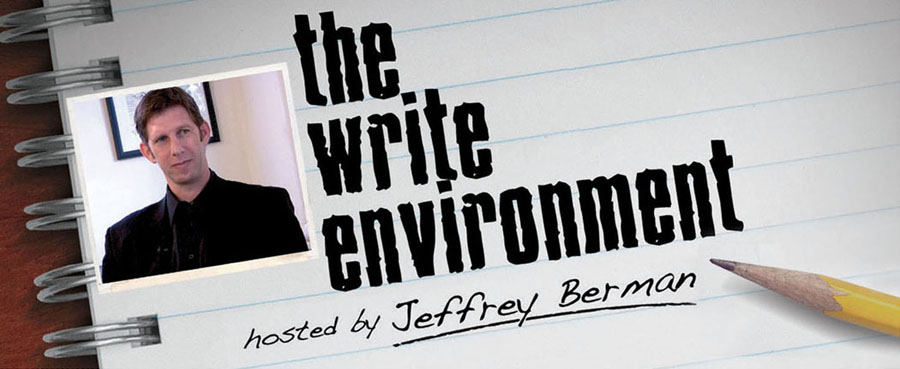
Wednesday is Drama Night. At 8:00 p.m., Robert Vaughn stars in Hustle, about a grifter who works with a team of con artists with a conscience in England. Then Helen Mirren stars in Prime Suspect as the tenacious, difficult and brilliant Jane Tennison, a no-nonsense British detective for Scotland Yard. Next, The Write Environment features local filmmaker Jeffrey Berman as host of one-on-one interviews with prolific screenwriters.
Jeffrey Berman hosts this series of programs that provides an insight into the creative process by talking to some of the most influential writers in the entertainment business. This week's guest is writer/director Joss Whedon, who is one of the most prolific figures in television.
You can find out more and keep track at KCET's website. http://www.kcet.org/shows/write_environment/
Or keep watching here for updates.
Thursday, February 25, 2010
Juliet Landau Takes Flight
Juliet Landau is a renaissance woman. She acts, writes, directs, produces, edits and for all I know, dances a mean tango, too.
So when Gary Oldman agreed to direct a music video shot entirely on Nokia cell phones for the Jewish Hip Hop band, Chutzpah he realized his three-day odyssey needed to be documented in a behind the scenes “making of” video. With that in mind, Oldman turned to first time director, Juliet Landau to capture his unique vision.
"Juliet Landau is an exceptional talent! I entrusted Juliet to make a documentary film about me and I am thrilled with the results! TAKE FLIGHT is a special film that shows me in a very different light. I will work with Juliet again without hesitation."
-Gary Oldman
What began as a five-minute behind the scenes “making of” film quickly morphed into a 25-minute documentary that is at times oddly transfixing, very insightful and mostly a joy to watch.
So why are we talking about a documentary in a blog that’s dedicated to writing? Because films don’t happen in a vacuum. Dramatic screenplays don’t write themselves and documentaries aren’t just cut together without a lot of pre-production.
Documentary filmmakers, like their screenwriting counterparts, endeavor to tell strong character-driven stories with tension, and a narrative arc that keeps the viewer engaged from the beginning to the end. Unlike writers of fiction, documentarians can’t invent characters and plot points, so it is incumbent upon them to instead find these in the subject they choose to shoot. In many ways editing a documentary is very similar to editing a first draft of a script. The struggle to decide what to include is as equally important and difficult as deciding what to omit.
In a documentary, shots, scenes, and sequences help to convey narrative information about time, place, events, people, emotion and point of view. Obviously the better you know your story before you shoot, the better prepared you’ll be to find those key moments as they occur.
In the weeks leading up to the release of TAKE FLIGHT, Juliet engaged in a whirlwind of interviews, marketing strategies and updates via social media, all the while editing a viral campaign in hopes that it would be ready in time for its target release date, February 25th. Juliet was kind enough to take a few minutes out of her busy schedule to discuss the process of creating a first time documentary.
Juliet Landau: Well, first of all, Gary Oldman was about to direct a music video for the Jewish Hip Hop band, Chutzpah, which he was shooting entirely on cell phones. He asked me to direct the “making-of.” After I agreed, I realized that although I have been in many a “making-of,” I had never actually watched even one. I buckled down and watched tons of film “making-of’s,” music video “making-of’s,” documentaries and director commentaries. I made notes about the elements that I found most interesting and riveting. The thru line of those elements began to emerge. It became clear that I was interested in seeing an artist at work, being a party to his/her process. I knew that I was going to have three cameras, and while I would catch all of the action, I was certain that I would stay on Gary as much as possible. I had 50 hours of footage that I condensed into a 25-minute film, which includes Gary’s music video at the end. I watched all 50 hours three times through. Gary operated one of the “cell-cam’s” which afforded us an extremely rare POV. It’s as if the viewer is inside his head, seeing through his eyes. It was while watching the footage that it evolved. I asked Gary if I could make a short documentary and he gave me his blessing to do so.
JB: What was the development process like on TAKE FLIGHT? What kind of shooting outline or detailed treatment did you write to serve as a blueprint for the documentary? JL: I made a timeline of all of the shots I wanted to be sure to get. But, I also wanted to be open to go with the surprises as they presented themselves. While I did shoot some direct to camera interviews, I always felt it would be more in the vein of verite filmmaking. My outline was two pages long. I would check stuff off as we got it, for instance, having each of the girls sing the Red Rover song. It was always my intention to try to capture Gary’s incredible sense of humor.
JB: How did the editing process affect the story you initially set out to tell with TAKE FLIGHT?
JL: Initially I thought I’d cut the cell phone footage in here and there with the HD footage being the basis for the timeline. But when I saw the unique perspective I had with the phone footage, I decided it had to be the reverse. I intercut it in the following way: first we get peppered glimpses, then longer, more expansive pieces, and by the end, the viewer is completely released into Gary’s view. While it all cuts seamlessly and fluidly, I decided to keep the cell footage 4X3, and everything else 16X9. Not only does it preserve Gary’s framing, it makes it clear to the audience when we are “looking though his eyes.” The music video is very cutty. I wanted to linger on and relish the beauty of those shots. The film starts as a chronicle of the shoot, but it becomes something more. There is a point where Gary says, “I’m just trying to find the right moment…” I think that is the pursuit of every artist, searching for the moment where everything gels, and takes flight.
JB: How involved were you with Gary Oldman as he was shooting his video? Was there any discussion with him prior to shooting about shots you wanted or were looking to get? JL: He basically gave me free reign so I was really nervous when the day arrived to show him my cut. I went to his house with my computer, the hard drive and a thick spiral notebook, to get his notes. I thought sitting there while he watched it was going to be the most interminable 25 minutes of my life. But I started the film, and low and behold, it was fun! He was completely engaged and laughing throughout. Afterward, I had my pen poised, ready to take copious notes. But he only gave me one note. A note about moving a sound cue, one of his comments, to a bit later, and that was it!
JB: As a first time documentary writer/director what did you learn from producing TAKE FLIGHT and how will this affect the next project you decide to shoot?
JL: Just like with acting, and with life for that matter, it is good to trust your instincts. They always lead me in the right direction. I was lucky to work with incredibly talented, skilled people, which I absolutely will do on my next shoot. Also, preparation is key. When I co-directed the HERO music video for Godhead or with the viral campaign I am putting together for TAKE FLIGHT, preparation makes all the difference in the world. I prepare for everything I work on, whether it’s acting, still shoots, directing, you name it, and it always pays off. I find the more prepared I am, I have a fluidity and ease to flow with the unexpected. I’d like the next project to have a real budget. It is hard to work around people’s paying gigs when you are pulling in favors. The process gets protracted and tiring. But either way, in the end, it is amazing to have a vision and to bring it to life!
You can watch Take Flight at Juliet’s official site.
Thursday, February 11, 2010
From Batman to Star Wars: Writer Steven Melching Gets Animated
In many respects, animation writing is the bastard step-child of TV and screenwriting. When it comes to the act of writing there is absolutely no difference between writing a script for an animated half hour series or that of a live action sitcom. There just isn’t. Any way you twist the glass it’s still writing. Yet for all the strides the Writers Guild of America (WGA) has made towards protecting TV writers, they still don’t cover animation writers. There is no reasonable or logical explanation for it; it’s just a fact of life. Becuse of this the majority of animation writers are denied the same benefits as their cousin live action writers (with the exception of some prime-time animated series). Most animation writers receive no residuals, spotty health coverage and often times little or no recognition for the job they do to entertain us.
And yet, knowing all that, given the opportunity I would like to write an episode of an animated series somee day. It’s practically the only genre of screenwriting I have yet to tackle. I’ve written feature scripts. I’ve written TV movies, spec’d a few sitcoms and even wrote a rom-com pilot. But I’ve never written a script for an animated series. The reason lies partially in the reality that as low as feature film screenwriters are on the Hollywood totem pole, and believe me, we’re pretty low, animated writers are at the bottom of the totem, deep beneath the ground.
It’s probably for this reason I’ve never had an agent or a manager push me in that direction. But I’m still a kid a heart and I still love cartoons. So to be able to write one would be a fantasy for me. Not something I would do for the money and certainly not for the fame but something I would do for love of the art. I might not be able to retire on it but you can bet your bottom dollar I’d be as proud of it as anything else I’ve written.
The beauty of writing animation is there are very few limitations. Anything the writer can imagine can be filmed without fear of changes due to cast or budget limitations because there simply aren’t any. Of course, it would probably help if I had more contacts in the animation world.
I have one now. Steven Melching . Some of the more recognizable series Melching has been associated with include: X-MEN, GODZILLA, AVENGERS, MEN IN BLACK, THE MUMMY, LEGION OF SUPER-HEROES, two different BATMAN series and the crème-de-le-crème, STAR WARS: THE CLONE WARS. In the world of animation Melching is one of my heroes.
Steven Melching: That’s difficult for me to answer, because I haven’t written much live-action television. But I think there are more similarities than differences, especially given how sophisticated animated television has become in the last 15-20 years in terms of storytelling. It’s no longer strictly for children. There’s been an explosion of animated series for the adult audience, and even shows produced primarily for young audiences have strong followings with teenagers, college students, and beyond. Any stigma attached to watching cartoons after a certain age has evaporated.
There’s a misconception that you can “do anything” in animation, that the only limitation to the storytelling is the writer’s imagination. While there is some truth in that, the fact remains that animated series have budgets and schedules, just like live action. Speaking parts still have to be cast and actors paid, and even though actors can perform as many as three voices, we can only afford to hire so many. Each new character, prop, vehicle, and location has to be designed by an artist, which costs money. And some things are just very difficult and/or expensive to animate convincingly, so we try to avoid them. Things like crowd scenes. There might actually be more differences between writing for cell animation versus computer animation than between animation and live-action. Or between writing gag-driven animation versus action/adventure animation.
One thing we tend to do in animation is “direct on the page,” which is discouraged to varying degrees in live-action. Sometimes it gets as detailed as describing every single shot in a scene. So animation scripts are generally much longer than live-action scripts. For example, a script for a 30-minute action/adventure show is usually between 32-36 pages long, but written in the same single-space format as a live-action movie.
And I’m really only talking about half-hour “story driven” animated series. Other cartoons don’t really even have scripts at all. They start with an outline, but are “written in storyboard” by the story artists and director.
JB:. How has your style of writing changed from early in your career when you were writing for The X-MEN to today where you’re currently working on BATMAN: THE BRAVE AND THE BOLD?
SM: If anything, my style has gotten looser and more readable as I got more comfortable with the medium. I think my craft and confidence has improved to the point that I can use fewer words to say the same thing. (Not that you can tell by my long-winded answers to these questions.)
When I started on X-MEN, I loved to write the action sequences. I took great pleasure in plotting out the mayhem blow-by-blow. But as the years pass I find that stuff less and less interesting to actually write. Don’t get me wrong, I love action. I love dreaming up an inventive setpiece. And I love figuring out how to advance story, explore character, and illuminate theme through action, but actually sitting down to type it all up is sometimes tedious.
JB: How much freedom do you have when it comes to story and character development for a series like STAR WARS: THE CLONE WARS? And what, if any, are the limitations?
THE CLONE WARS is a unique case. I’ve been lucky enough to have the opportunity to work on shows based on beloved properties with long histories and devoted fandoms (X-MEN, BATMAN, HE-MAN, TRANSFORMERS), but never one where the original creator was actively involved. I mean, George Lucas is personally involved in every stage of the process, from approving (and often generating) stories, giving notes on scripts, supervising the design, to shaping the final episodes in the editing room (which can involve a lot of rewriting and restructuring). Also, the director is king at Lucasfilm. That’s just George’s filmmaking philosophy. In large part the script serves as a means to generate film to edit, which then illuminates what elements need to change. It’s a fascinating process.
As a writer for CLONE WARS, I can’t say I had much freedom in terms of the big picture, for several reasons. George Lucas and supervising director Dave Filoni have very specific goals in mind for the stories. And since the series takes place between two movies, there’s only so much development that can take place, at least as far as the major film characters are concerned. Where there is latitude is with the supporting characters, as well as the ones that were created for the show. As a writer, my challenge is to capture that very specific STAR WARS tone, find fun ways to keep the story moving, and invent new little details that are surprising.
JB: In animation what comes first, story or plot? And why?
SM: Story, for sure. To me, story is the broad strokes, the beginning-middle-end, the journey of the characters. Plot is the logic and mechanics required for the story to track and make sense. With some shows, CLONE WARS in particular, a third element is very important: theme. In fact, that often came first. What is the story really about? The answer to that question informed every other aspect of the writing.
JB: Can you break down your writing routine on a typical episode of BATMAN: THE BRAVE AND THE BOLD?
SM: It always starts with a call from producer/story editor Michael Jelenic. He tells me what heroes and villains they want to use, and which ones they don’t. Sometimes he has an idea for a story for me to flesh out, and sometimes he asks me to pitch him ideas. Once we hone in on a story we’ll get together with producer James Tucker and we’ll try to break the story in the room. Throw around ideas, and come out of the meeting with a strong idea of what the “A” and “B” stories are, how they relate, and what the character arcs and relationships are.
Then I go home and write it up in a few pages. Michael and James will give me their thoughts on that premise, and then I’ll either revise it or flesh it out further into a 10-12 page outline that lays out the story scene-by-scene. Then it’s back to Michael and James for another round of notes. Unless we discover major problems with the story, I don’t usually rewrite the outline. I just keep the notes in mind as I write the first draft script. Then another round of notes and another draft. Hopefully the script is in pretty good shape at that point, and Michael does the final polishing himself.
A couple weeks later comes the best part, the cherry on the sundae: the voice recording session! It’s always a blast to go into the studio, see the cast and meet the guest stars -- and we get some GREAT guest stars. One of my favorite memories is seeing comedian Fred Willard in the booth with German horror actor Udo Kier. It’s really satisfying to hear the script come alive. As the writer, I am sometimes asked to clarify things for the director or actors, and write new dialogue on the spot.
JB:. What is the best advice you can offer to someone who wants to break into the world of animated series as a writer?
SM: Make sure it’s what you really want to do. Don’t think of it as “slumming,” or as a way to earn some quick and easy cash, because it’s neither. Producers can smell that attitude a mile away. It’s vitally important to love animation, and understand its strengths and weaknesses.
Aside from that, I’d give the same advice to someone who wants to break into live-action. First, write a spec animation script (or two) for a current show in the genre you want to find work in, like action/adventure, action/comedy, comedy, or pre-school. Then make contacts with producers and executives any which way you can. Ask them to read your stuff. Or better yet, put yourself in a position where they ask to read your stuff. Get a job at a studio or network, or on a show as a script coordinator or producer’s assistant, so you can move in the right circles. Learn the world and the players. Read animation scripts and watch animated series. Animation is a rather small and insular community, and it can be very difficult to crack, so you have to be patient, and above all, persistent.
Monday, February 1, 2010
Neil Gaiman, Literary Rock Star and Me.
JB: You spent ten years crafting the mythology that went into the Sandman. What kind of research did you do before you began writing it and how much more was required on your decade long journey with Morpheus? Did you always know where the story would end or was it something you came upon as you were writing it?JB: How do you know when something you’ve written is finished or at least good enough to let go?
Sunday, December 20, 2009
Braving New Trails to the Web and Beyond with Screenwriter Aaron Mendelsohn
Jeffrey Berman: What was your first break as a writer and what did you learn from it that you brought to your following writing assignments?
AM: I think writing for children and animals is very liberating in that you don't have to conform to all the restrictive logic and behavior that comes with writing adult characters (unless you're Judd Apatow, in which case you write your adults as if they're children). And it's nice not to feel you have to make every line of dialogue Sorkinesque. The challenge, when writing about kids or dogs, is to not be too precious. No one likes precious. And avoid anthropomorphism. Dogs don't smile, they don't dance, and they don't raise their eyebrows. When we were writing Air Bud, our Post-It note on the computer was: Everything the dog does, he does it for the boy. He doesn't play basketball because he's some ball-jonesing canine Michael Jordan, he plays it because the boy he loves plays it. JB: When you’re working on a story and you creatively hit a wall, what techniques do you use to break through and finish the script?
JB: You recently created a new media company called, Virtual Artists that produces sponsor supported content. Is writing for the web different than writing for Film and TV, and if so, how does it differ?Thursday, December 10, 2009
Josh Olson Won’t Read Your Script, But He Might Adapt Your Story
The best education I ever got as a screenwriter came from reading scripts. When I started out I read every script I could get my hands on. I still do. When I have the time. Screenplays also make the best reference material when it comes to analyzing and breaking down a scene, especially when you’re stuck on one of your own. So when you read as much as I do, you digest a lot of pabulum. But every once in a great while you come across a screenplay that sucks you in and demands to be read. A script that refuses to let you put it down, until you’ve read every word, from Fade in until The End, every time you pick it up. A History of Violence is one of those scripts for me.
Based on a graphic novel (comic book), the screenplay by Josh Olson was nominated for an Academy Award, a BAFTA, the WGA award, and an Edgar in 2007.
Which segues into this week’s topic. Adapting scripts from other mediums whether it’s a novel, a play, a comic book or a video game, is a different breed of writing. You would think it would be easy; after all, the story and character are already developed which leaves the writer the simple task of transcribing it for filming. You would think that… but it ain’t so. I know firsthand because I’ve written several adaptations, including an M.O.W based on a biography of J. K. Rowling and I can honestly tell you that it was more difficult to write than some of the original scripts I’ve written.
So when it came time to discuss adaptations I went to one of the best, and one of my favorite writers: Josh Olson.
Writer of the cult movie, Infested, Olson broke into the studio world when he sold his original script Three Guns Blue to Paramount Pictures. That led to his first studio assignment, adapting the graphic novel A History of Violence. Since then, Olson has collaborated with legendary author Harlan Ellison on an adaptation of Ellison’s “The Discarded” for the ABC TV Series Masters of Science Fiction. He’s also worked on adapting the hugely popular video game HALO for producer Peter Jackson and has adapted the Dennis Lehane short story Until Gwen, which he will also direct. Additionally, he contributed the script Have I Got Story for You to the smash hit Batman: Gotham Knights project. More recently, Olson wrote a sequel to The Wizard of Oz for Warner Brothers and has just finished adapting the Lee Child bestseller One Shot for Paramount.
He is currently developing a TV drama, Pleased To Meet Me, with the legendary guitarist Slash, and is writing the pilot for Meanwhile, a dramatic series he created and sold to producer Peter Chernin and the Fox Network. Olson can also be seen commenting on classic film trailers at Joe Dante’s website, Trailers From Hell.
His Village Voice essay, “I Will Not Read Your Fucking Script” became an internet phenomenon, getting upwards of two million hits, and is spawning a book. (I wonder who will adapt it for the screen? Ed. Note).
Jeffrey Berman: How does the writing process differ when adapting a screenplay from a book versus working on an original idea?
Josh Olson: Every script is its own thing, whether it’s original, or an adaptation. There are no set rules to any of them. I’ve done adaptations where I’ve only read the source material once, and I’ve done them where I had the book open in front of me every step of the way. Hell, the writing process differs from page to page, let alone project to project.
JB: With a comic book like A History of Violence you obviously have less material to draw on then you would a novel or a series of novels like Oz. Does that allow you the freedom to develop original material or is there a fear of straying too far from the source? And does that make your job easier or more difficult?
JO: It’s not about the quantity of material. It’s about the material itself, and what you’re going to do with it. With History, I took John Wagner’s premise, title, and - god help me for using this phrase - “inciting incident,” and then leapt off and told my own story. The graphic novel was packed with story, it just wasn’t a story I wanted to tell. It’s a solid, smart and fun action thriller, but I was a lot more interested in getting into questions of identity. In the book, there’s never a moment’s doubt that the main character is the man the mob guys think he is. I felt like that was a missed opportunity. I thought it was a great chance to play with a classic “wrong man” scenario in which the wrong man is actually the right man. And that led me to start thinking about identity, and what it is that constitutes your “self.” Is Tom the guy they all say he is? Or is he the guy he’s made himself into?
But, like I said, it’s not about quantity of material. I adapted Dennis Lehane’s short story Until Gwen a while back. It’s a 15-page story, and it’s very spare in terms of plot and detail. It’s mostly flashes of memory, tiny details, and bursts of emotion. Very little to work with, in terms of traditional scenes, but one hell of a powerful story. For the screenplay, in order to create a feature length narrative film, I had to invent most of the scenes, many of the characters, and find a way to structure it as a visual narrative. In terms of what a screenwriting 101 teacher would call “adaptation,” there’s maybe 20 pages of the thing that are directly based on Dennis’ story. However, from the first page to the last, I was being absolutely faithful to Dennis’ story and his vision, at least as I saw it.
That’s what it boils down to for me - writing is all about taking what I see and feel and communicating it to you. In the case of an adaptation, it’s about showing you how I saw something. Because I’ll never be able to really know what Dennis’ real vision was. All I can do is tell you how I connected to it, and hoped that it touches and moves you. In the case of something like Until Gwen, I’d also hope that it would inspire you to seek out the source material and let it have its way with you as well.
JO: One Shot was a project where my mandate was to introduce a very popular fictional character to a movie audience. In that One Shot is actually the ninth book in the Jack Reacher series, it necessitated changes that would allow us to make this the first movie. But beyond that, there’s almost always some basic nuts and bolts things that have to change. In One Shot, for instance, the book is paced rather leisurely. Jack spends a lot of time going back and forth between the same two or three locations, and while it works great in the book, it would have left us with a very static movie. I had to come up with ways to combine the net result of several scenes into one, all while not just being faithful to Lee Child’s fantastic character, but also introducing him to a larger movie audience that won’t be familiar with him.
JB: What advice would you offer to writers who are driven to find stories from other mediums to adapt as feature films?
JO: We’re at a point in the film business where it’s harder than it’s ever been to sell originals. We could discuss and argue the reasons for this ‘til the cows came home, but in the end, it wouldn’t change that fact. Studios are heavily invested in doing material that has some semblance of built-in recognition. The trick, for me at least, has been to find material that I click with personally. In the case of Until Gwen, it was a short story that just gutted me. In the case of History, it was a premise that allowed me to take the story into an entirely new direction and explore ideas that are of deep personal interest to me. With One Shot, it was a chance to fill a void I’ve been feeling for many years - the absence of smart, American tough guy movies. The book came to me the morning after I’d shown my girlfriend the first two Dirty Harry movies, and we’d talked about how sad it was that no one was making movies like that anymore. With Oz, I got to take books that I loved as a kid and use them to comment on the state of imagination today.
People often perceive adaptations as somehow easier than originals... “coloring between the lines,” if you will. But if you find the way into them, the way to make them personal to you, they can be as challenging as satisfying and as difficult as an original. Sometimes more so. The vast majority of directors don’t write their scripts. In essence, they’re adapting someone else’s work, translating a singular vision from one form to another. It’s all a challenge.
Tuesday, December 1, 2009
Getting it write with Jeffrey Berman, the host of The Write Environment
So...
In the meantime, I thought this might be a good opportunity to reprint an interview that I did on the The Write Environment for Talking With Tim, which is a great site where you'll find pop culture interviews by Tim O'Shea. Check it out... but not until after you've read my interview first.
Jeffrey Berman on The Write Environment
When the writer’s strike happened in late 2007/early 2008, writer Jeffrey Berman was looking for a way to stay busy in a productive manner. And that’s how his new project began–The Write Environment. Here’s more details on the project: “THE WRITE ENVIRONMENT features 50-60 minute, in-depth, one-on-one interviews with some of the most lauded and prolific writers in the television industry today, including Damon Lindelof (Lost), Tim Kring (Heroes), Phil Rosenthal (Everybody Loves Raymond), Doug Ellin (Entourage), Sam Simon (The Simpsons), and Joss Whedon (Buffy the Vampire Slayer).… each episode … takes viewers backstage into the heretofore unseen world of the writer’s room for intimate interviews that offer a rare look at these diverse writers and what inspires them. From that first idea to the finished script, the writers share their views and stories, examining their successes, failures, and everything in between.”
I enjoy the chance to interview interviewers, so my thanks to Berman for his time. In preparation of the interview, he was kind enough to allow me to view screeners of the Lindelof and Whedon interviews. My thanks also to Sylvia Desrochers for making this interview possible.
Jeffrey Berman: The series came about as a byproduct of the Writers Guild Strike. I had co-founded a web site called UnitedHollywood.com. Our mission was to keep our members, and the public, informed as to what was really going on behind the scenes. My contribution to the site was producing live interviews from the strike line as well as viral videos to assist in getting our point of view heard. As the strike progressed we started talking about cutting out the middleman, aka the studios, which would allow us to retain ownership of our own projects. As an aside, I’ll tell you that screenwriting is the only faction of the creative world where the creators do not retain ownership or rights to their material once they sell it.
O’Shea: When you saw Dr. Horrible mapped out on Whedon’s planning wall, did you have any inkling how popular his “Internet thing” (as he described it to you in passing) would be?
Berman: That’s funny, but no. There are no trenches worn into his floor. Of course, had it been a carpeted floor it probably would have shown more wear, but I related to this as I do the same thing. No trenches in my home, either.
Berman: Yes and no. I did research each of the writers background and reviewed their work histories but beyond that I approached the interview from two sides; As a fan and as a student. Then I split my question down the middle. Or at least I tried to. And no prep was given to the writers beforehand. Though Joss and I did have a chance to talk a little shop while the crew was setting up for the shoot. Wouldn’t you like to know what was said then? Heh-heh!
Berman: It’s really a crap shoot when you do these kind of interviews. It’s taxing to ask someone to sit and talk about themselves for over an hour at a time. ( Which is why I chose to do it in a surrounding where they’re comfortable. ) I was extremely pleased and rewarded with how generous and forthcoming all of the writers were. Not to mention insightful. Each of them has a s wealth of experience in different formats and they were all absolutely fascinating to speak with.O’Shea: I’ll ask the question you asked some of the writers: “what makes a good writer”?
O’Shea: In talking to these creators about their show, did any of them instill in you a new level of appreciation of the show or its characters?
Berman: I have to go back to Phil Rosenthal because I think he broke the mold with Everybody Loves Raymond. How that show was allowed to survive for nine years astounds me. And lucky for us it did. It was on the bubble many times, but kudos to CBS for sticking by it.
O’Shea: How do you explain your encyclopedia-level knowledge of TV (ie your example of Donald Bellisario’s breaking his vow never to delve into JFK in Quantum Leap)?
Berman: I’m a fan. What can I say?
Berman: Yeah, if I can put in a plug, please check out my site at http://www.thewriteenvironment.com/indexFlash.html and buy a DVD or two. Then tell a friend. Then tell your friend to buy a DVD or two… or three… Okay, I’ll stop now.


